Devon Franke · 21 October 2026
Mapping Distribution Challenges for Boutique Botanical Health Brands in Emerging Local Economies
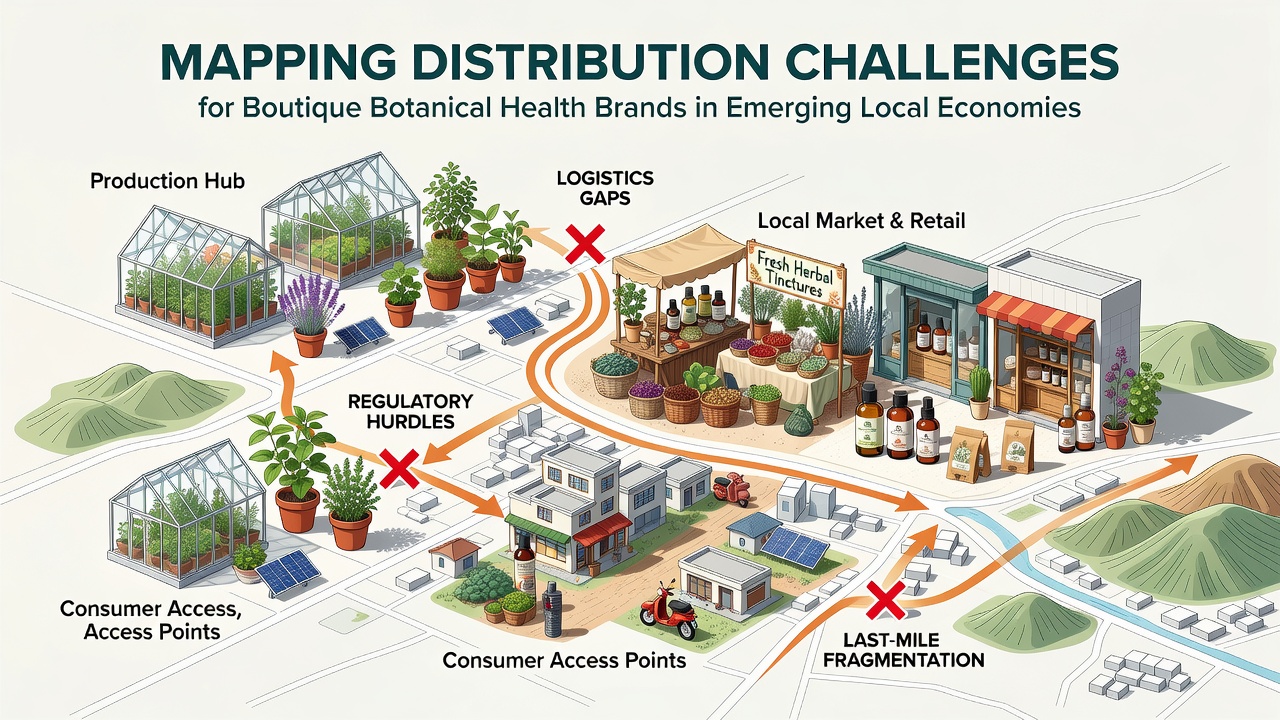
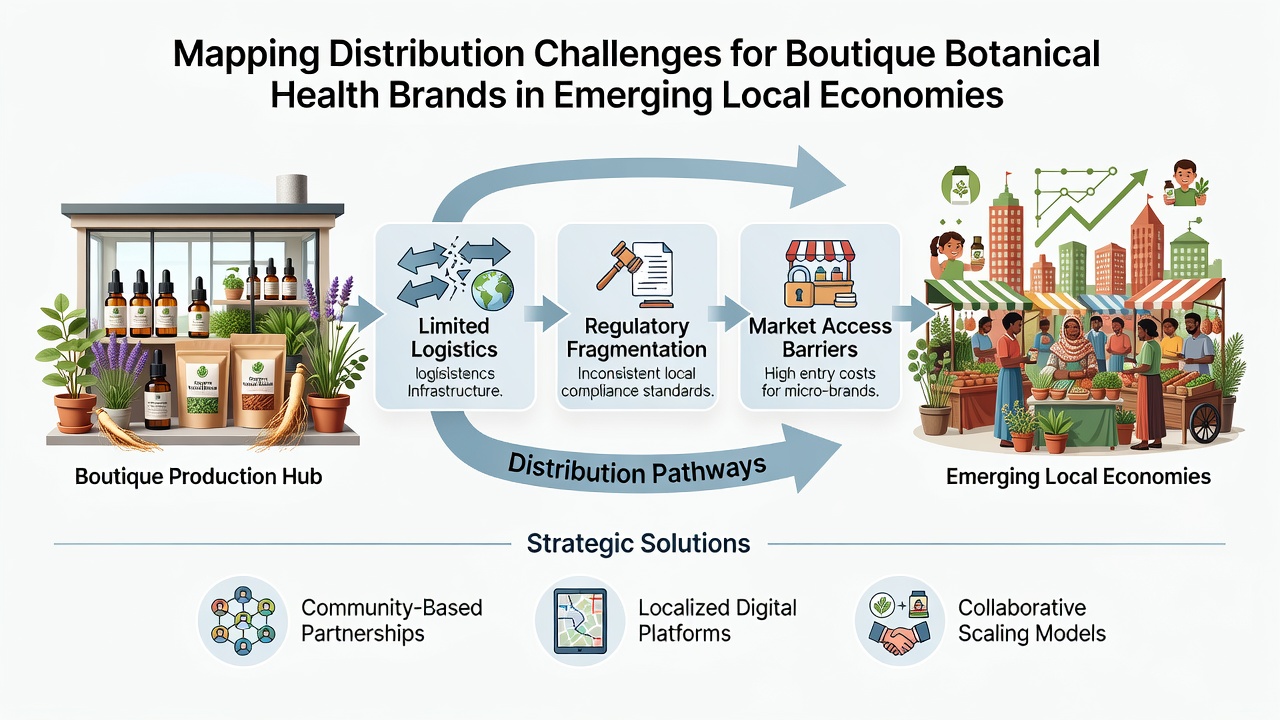
Distribution networks for boutique botanical health brands face distinct obstacles when operating in emerging local economies where infrastructure varies widely and regulatory frameworks continue to evolve. These brands typically focus on small-batch herbal supplements, essential oils, and traditional plant-based remedies sourced from regional growers, yet reaching consumers requires navigating fragmented transport systems and customs procedures that differ sharply across Southeast Asia, sub-Saharan Africa, and Latin America.
Regulatory Variations Across Regions
Countries such as Vietnam, Kenya, and Colombia maintain separate registration pathways for botanical products, each requiring documentation on ingredient safety, labeling standards, and manufacturing practices that small producers often assemble from multiple agencies. Data from the World Health Organization shows that over 80 percent of member states in these regions have updated traditional medicine guidelines since 2020, creating ongoing compliance demands for brands that export across borders. Observers note that October 2026 marks the scheduled implementation of harmonized ASEAN standards for herbal supplements, which analysts expect will streamline some approvals while introducing new testing protocols in participating economies.
Infrastructure and Logistics Realities
Transport routes in many emerging markets rely on a combination of road, river, and limited rail connections where temperature-controlled storage remains scarce for sensitive plant extracts. Studies conducted by the International Trade Centre indicate that cold-chain coverage in rural production zones of East Africa and the Andean region reaches less than 30 percent of needed capacity, leading brands to coordinate staggered shipments during cooler seasons or invest in portable cooling units. Those who have mapped these routes report that delivery times fluctuate between three days adn three weeks depending on seasonal weather patterns and border processing speeds.
Supply Chain Coordination Issues
Small-batch producers depend on networks of local farmers and wild-harvesters whose output volumes shift with rainfall patterns and market prices for competing crops. Research published through academic institutions in Brazil and Indonesia highlights how traceability requirements now appear in procurement contracts from European and North American buyers, pushing brands to implement batch-level documentation that smaller cooperatives struggle to maintain without digital tools. And yet coordination improves when brands establish regional collection hubs that aggregate product from multiple villages before consolidation into larger shipments.
Market Access and Retail Integration
Retail channels in emerging economies range from urban pharmacies and wellness stores to informal markets where trust builds through direct vendor relationships rather than national advertising campaigns. Figures from regional trade associations reveal that independent brands achieve wider placement when they partner with established local distributors who already manage relationships with hundreds of small outlets. Those partnerships often hinge on shared inventory tracking systems that allow real-time visibility into stock levels across scattered locations.
Payment Systems and Financial Flows
Transaction settlement presents another layer because many rural retailers continue to operate on cash or mobile money platforms with limited integration to international banking. Data compiled by central banks in Nigeria and Peru shows that cross-border payments for botanical ingredients encounter processing delays averaging five to twelve business days, prompting brands to explore local currency accounts and factoring arrangements with regional financial institutions. Experts have observed that brands maintaining dual banking relationships in both source and destination countries reduce settlement friction during peak harvest periods.
Technology Adoption Patterns
Digital platforms for order management and last-mile tracking see uneven uptake because internet reliability differs between capital cities and production zones. Case examples from Thailand and South Africa demonstrate that brands using hybrid systems combining SMS alerts with cloud dashboards achieve better coordination with village-level suppliers who lack consistent smartphone access. Researchers discovered that training programs focused on basic digital record-keeping improved order accuracy by measurable margins within the first six months of implementation.
Conclusion
Mapping these distribution challenges requires brands to assemble detailed route data, regulatory timelines, and supplier capacity metrics that reflect actual conditions on the ground. Organizations that compile such maps gain clearer visibility into where investments in infrastructure partnerships or compliance support deliver the greatest operational stability across emerging local economies.